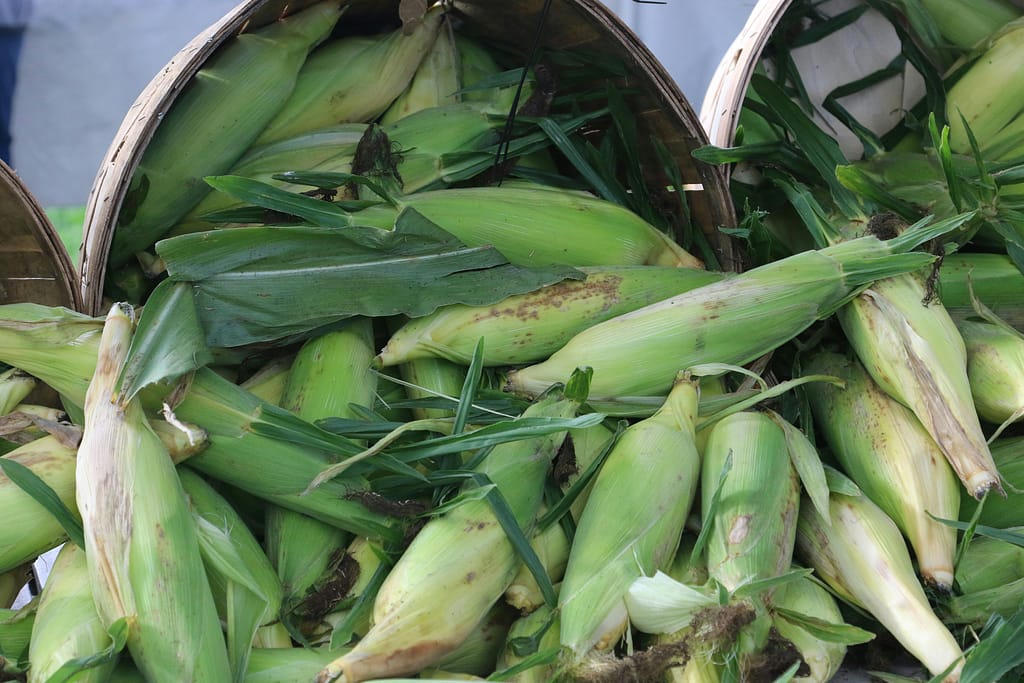
There are few things that say summer quite like fresh corn on the cob.
For me, it’s right up there with backyard barbecues, ripe tomatoes from the farm stand, homemade potato salad, and evenings spent eating outside while trying to beat the mosquitoes.
Every year, as soon as I start seeing roadside signs for Fresh Sweet Corn, I know exactly what’s going to happen. I’ll stop “just to grab a few ears” and somehow leave with a dozen ears of corn, tomatoes, zucchini, peaches, and probably a pie I didn’t know I needed.
It happens every single time.
Of course, once I get all that beautiful corn home, the question becomes:
What’s the best way to cook it?
The good news is there isn’t just one right answer. Whether you prefer steaming, boiling, grilling, roasting, air frying, or even microwaving, each method has its own advantages. And once it’s cooked, that’s only the beginning. Fresh corn can become everything from a simple side dish to the star ingredient in some of your favorite summer recipes.
A Backyard Tradition I’ll Never Forget
One of my favorite summer memories has nothing to do with actually eating corn.
It starts with peeling it.
When I was growing up, my dad and I would sit outside in the backyard with a big paper grocery bag between us, shucking ear after ear before dinner. The husks would pile up, corn silk would somehow end up stuck to our clothes, and we’d spend the time talking about whatever happened to come up that day.
At the time, it probably felt like another chore.
Now it’s one of those memories I’d love to relive just one more time.
Funny how food has a way of bringing people back to us.
Every time I peel fresh corn today, I’m right back in that backyard.

Why Fresh Local Corn Tastes Better
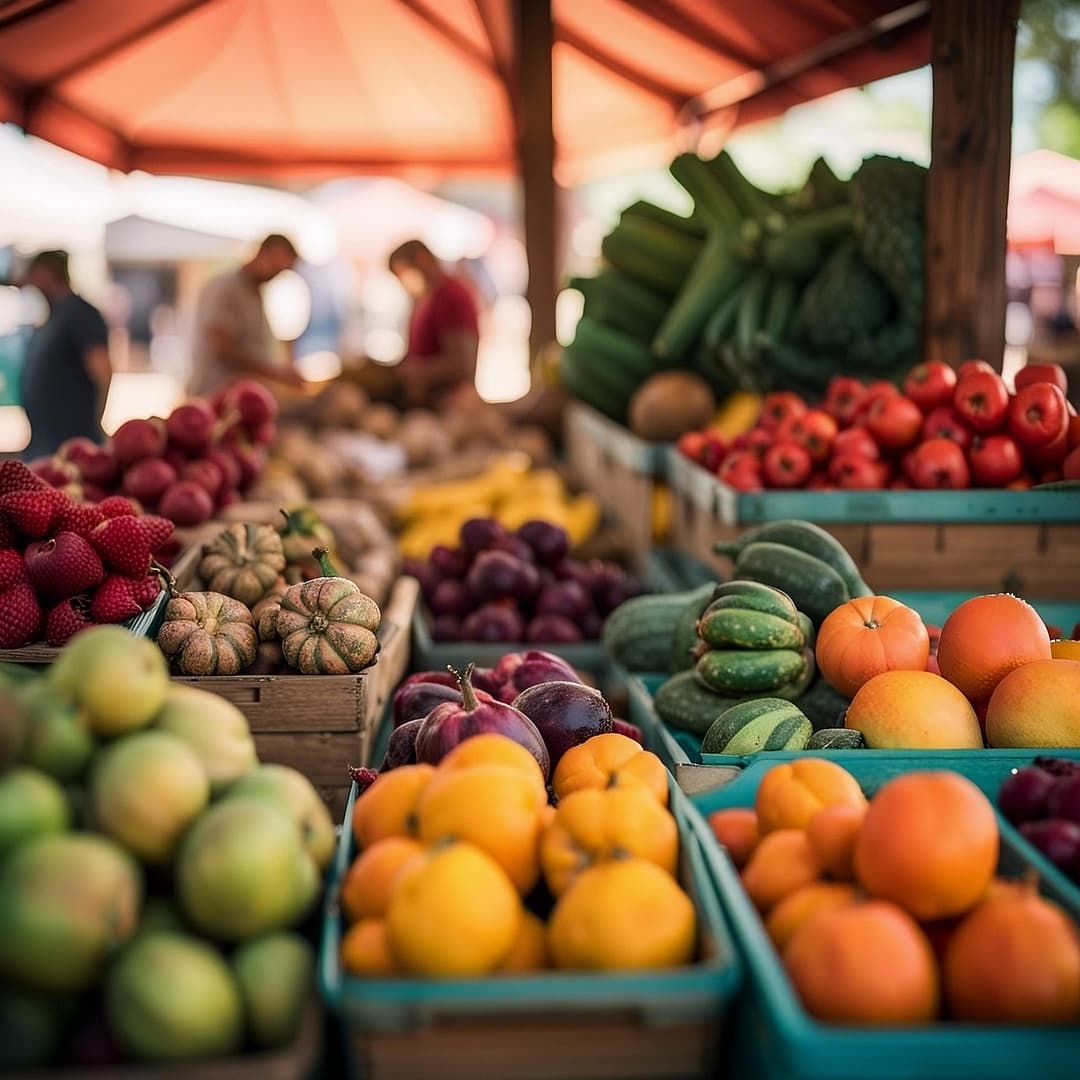
If you can buy your corn from a local farm stand or farmers market, do it! We have wonderful farmer’s markets here in Connecticut (I wrote about them in my post HERE!) You can’t go wrong stopping at a local market in August.
As I always say, START with fresh ingredients! It makes a world of difference in your cooking! And the fresh fruits and veggies (and baked goods, and… ALL THE STUFF) tastes fabulous!
Back to corn…
Freshly picked corn is naturally sweeter because, once it’s harvested, those delicious sugars immediately begin turning into starch. The sooner it’s cooked, the sweeter and juicier it’ll taste.
That’s why corn from your local farmer often tastes so much better than corn that’s traveled hundreds of miles before reaching the grocery store.
I love wandering through farmers markets during the summer. Even when I only need corn, I usually leave with fresh tomatoes, peppers, herbs, cucumbers, zucchini, and whatever else looks too good to pass up. MMM!
Summer cooking practically plans itself.
The Different Types of Corn
Depending on where you shop, you’ll probably find one or more of these varieties.
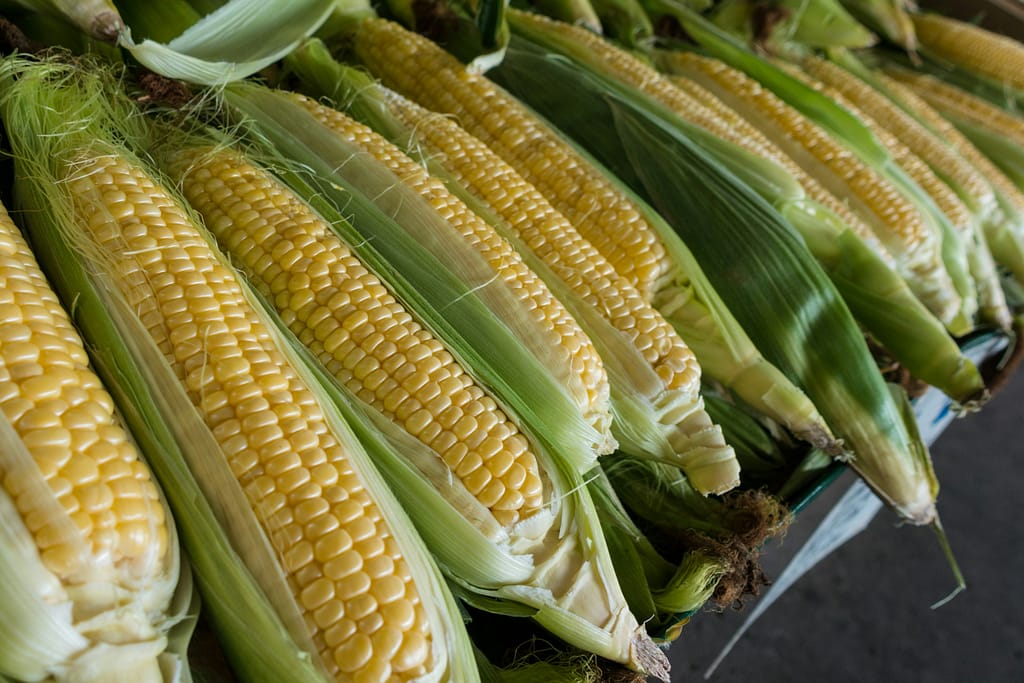
Yellow Corn
The classic.
Yellow corn has a rich, traditional corn flavor with beautiful golden kernels. It’s what many of us grew up eating and is wonderful simply slathered with butter.
White Corn
White corn is generally a little milder and often tastes slightly sweeter. The kernels are soft and tender with a creamy texture.
Bi-Color Corn
If I have a choice, this is usually what ends up in my shopping bag.
Bi-color corn combines yellow and white kernels and offers the best of both worlds. It’s incredibly sweet, juicy, and tender. Around here, it’s often the first variety to disappear from the farm stands.
Truthfully, though, the freshest corn usually wins, no matter what color it is.
How to Pick the Best Corn
You don’t have to peel back the husk to know if you’re buying good corn.
Instead, look for:
Bright green husks that wrap tightly around the ear.
Fresh-looking, slightly sticky silk.
Firm ears that feel full all the way to the tip.
Husks that still feel cool and moist.
One tip: resist the temptation to peel back the husk at the farm stand or grocery store. It dries the corn out and makes it harder for the next person to buy.
The Best Ways to Cook Corn on the Cob
One of the things I love about corn is that there really isn’t a bad way to cook it.
Steamed Corn
This is my favorite method!
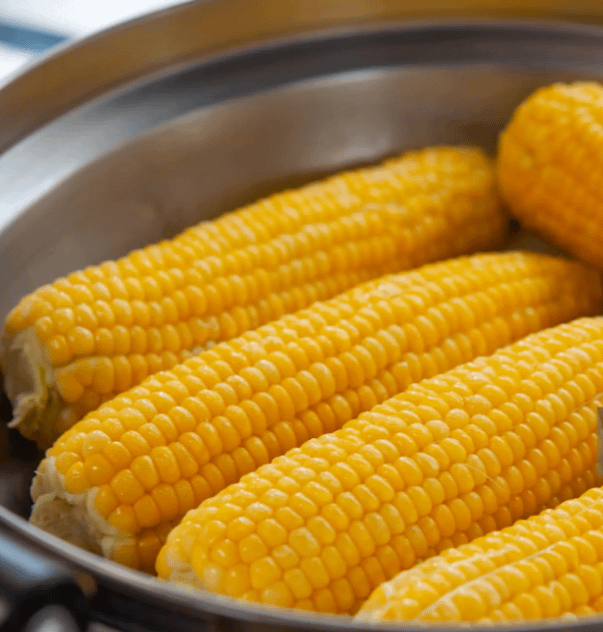
Steaming cooks the corn gently while keeping the kernels juicy and sweet. It doesn’t wash away any flavor, and the texture stays perfect every time.
Boiled Corn
Probably the method most of us grew up with.
Bring a large pot of water to a boil, add the corn, and cook for about 4 to 6 minutes. Fresh summer corn cooks surprisingly fast.
Grilled Corn
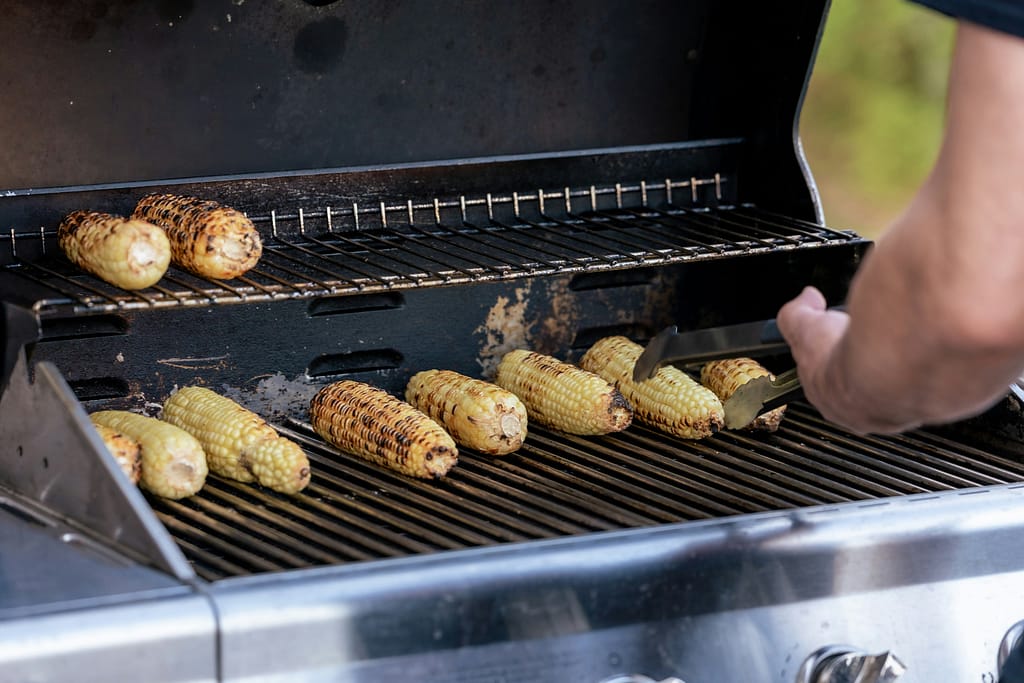
Grilling adds a smoky flavor that’s perfect for cookouts.
Leave the husks on for softer kernels or remove them if you want those beautiful char marks.
Oven Roasted Corn
Roasting develops a deeper, sweeter flavor and works well when you’re already using the oven for dinner.
Air Fryer Corn
If you’re cooking just a couple ears, the air fryer does a wonderful job. It creates little roasted spots while keeping the inside tender.
Microwave Corn
Need dinner fast?
Microwaving works surprisingly well, especially when you’re only cooking one or two ears.
Don’t Stop With Corn on the Cob
Fresh corn is so much more than a side dish.
Once it’s cooked, I love slicing the kernels right off the cob and using them in all kinds of recipes.
Some of my favorites include:
Also try these delicious bites:
Mexican street corn salad (Esquites)
Fresh salsa
Chicken tacos
Shrimp tacos
Fried rice
Quesadillas
Succotash
Corn fritters
Casseroles
Homemade corn dip
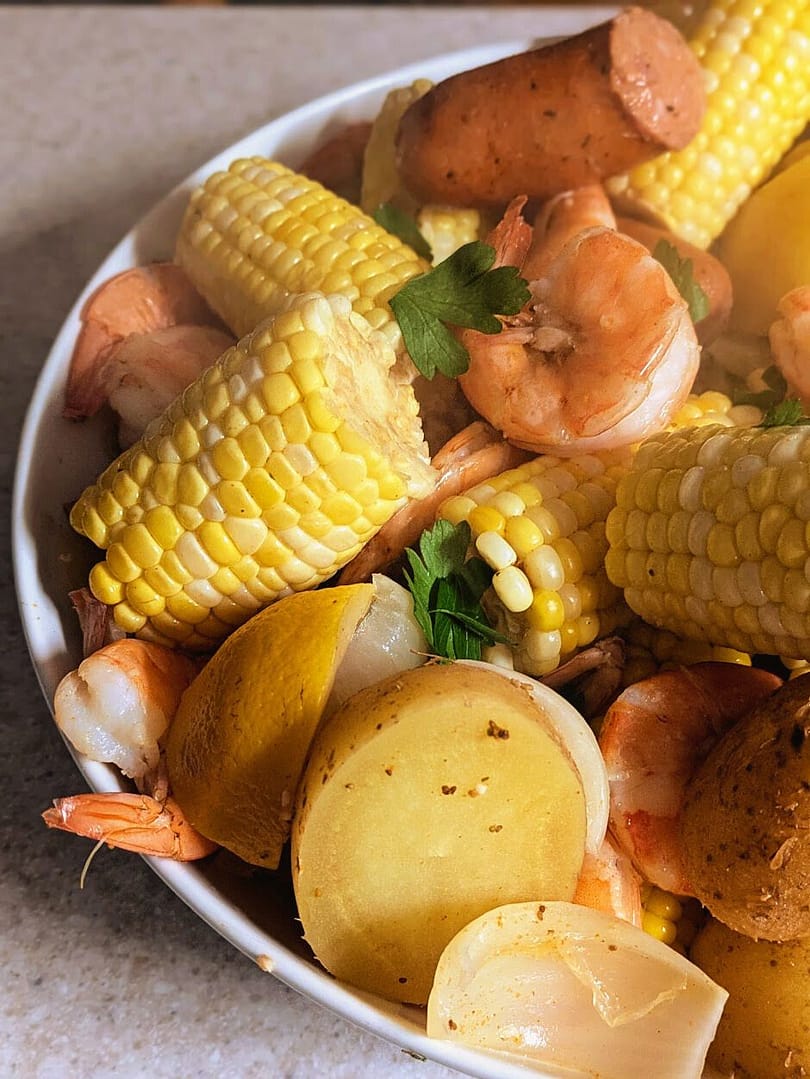
One of my absolute favorites is adding those sweet kernels to my Shrimp Boil. They soak up the buttery, garlicky broth beautifully and somehow become even more delicious.
How to Cut Corn Off the Cob
After the corn has cooled enough to handle, stand one end of the cob on a cutting board.
Using a sharp chef’s knife, slice downward, letting the kernels fall away from the cob. Turn the cob a little and repeat until you’ve removed all the kernels.
If you have a Bundt pan, place the pointed end of the cob into the center hole. The pan catches most of the kernels and helps keep your counter much cleaner.
Can You Freeze Fresh Corn?
Absolutely.
If you’ve ever found yourself buying way too much corn because it looked too good to pass up (I’ve definitely done that), freezing it is a great way to enjoy summer flavor all year long.
Simply cook the corn, let it cool, remove the kernels, and spread them on a baking sheet to freeze individually before transferring them to freezer bags.
They’re perfect later for chowders, soups, casseroles, fried rice, and pasta dishes.
Frequently Asked Questions
Should you add sugar to the boiling water?
No. Fresh sweet corn already has plenty of natural sweetness.
Should you salt the water?
It’s better to salt the corn after cooking. Salting the water can sometimes make the kernels a little firmer.
How long does cooked corn last?
Store cooked corn in the refrigerator for 3 to 5 days in an airtight container.
Can you cook corn ahead of time?
Yes. Reheat it gently in the microwave or by steaming for just a few minutes.
My Favorite Way
People always ask which cooking method is best.
For me, it’s steaming.
It’s simple, dependable, and lets that fresh summer flavor shine.
Then I add a little butter, a sprinkle of kosher salt, and call it dinner!
Some foods are delicious because they’re well seasoned.
Others are delicious because of the memories they carry.
Fresh corn on the cob is both.
Every ear reminds me of peeling corn with my dad in the backyard, stopping at roadside farm stands, and sitting down to simple summer dinners that somehow became the ones we remember forever.
I hope this guide helps you make a few memories of your own.