There are a few tools in my kitchen that I reach for constantly. My Dutch oven is one. My wooden spoons are another. And right up there at the top?
My sheet pans.
I use them for everything – roasting vegetables, baking cookies, toasting nuts, crisping bacon, reheating leftovers, and even as a tray to carry things in and out of the oven. If you cook even a little bit, a good sheet pan will quietly become one of your most-used tools.
And here’s the thing: not all sheet pans are created equal.
Let’s talk about what actually matters.
What Is a Sheet Pan?
A sheet pan (also called a baking sheet or rimmed baking sheet) is a flat metal pan used for roasting and baking.
There are two common types:
- Rimmed sheet pan – Has a raised edge around all sides (this is what I use most)
- Rimless baking sheet – Flat edge on one or two sides, great for sliding cookies off
If you’re only buying one? Go rimmed. Every time.

Why Cheap Sheet Pans Drive Me Crazy
You know that loud POP sound from the oven?
That’s a warped pan flexing from heat. And once they start doing that, they never really stop.
Here’s what happens with cheaper pans:
- They’re too thin
- They heat unevenly
- They warp at high temperatures
- They stain quickly
- Food browns unevenly
A heavy-duty sheet pan feels sturdy in your hands. It doesn’t bend easily. It lays flat on your counter. It roasts vegetables evenly instead of steaming them.
When you cook as often as I do, that matters.
What to Look for in a Good Sheet Pan
If you’re shopping, here’s what actually makes a difference:
1. Heavy-Gauge Aluminum
Aluminum conducts heat beautifully and evenly. Avoid flimsy, lightweight pans.
2. Light-Colored Metal
Dark pans can over-brown the bottoms of baked goods.
3. Reinforced Rim
Some pans have a rolled or reinforced edge to prevent warping. That’s a big win.
4. Standard Size
A half-sheet pan (about 18 x 13 inches) is the workhorse for most home cooks.
If you’re building your kitchen from scratch, start with two half-sheet pans. You’ll use them more than you think.
How I Use My Sheet Pans
This is where they really shine.
I use mine for:
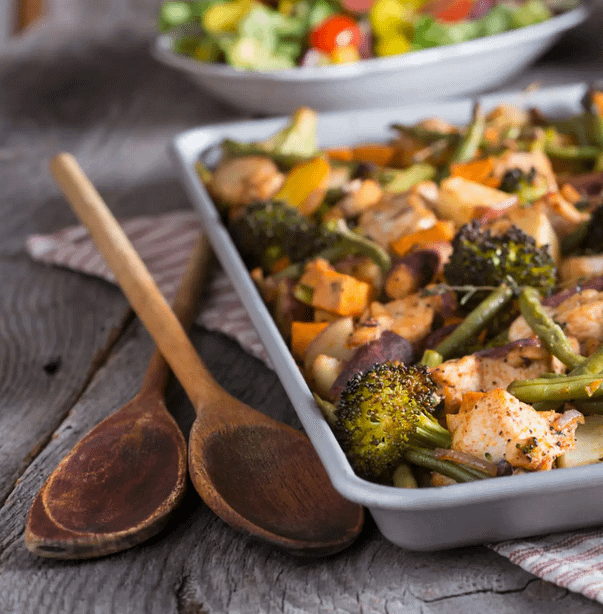
- Roasting brussel sprouts, broccoli, carrots, squash, and potatoes
- Baking blueberry scones
- Crisping chicken before adding it to casseroles
- Toasting breadcrumbs
- Cooking bacon in the oven
- Making sheet pan dinners on busy weeknights
- Baking or reheating pizza (so much better than the microwave)
- baking my baked potatoes (with a rack in the sheet pan!)
In the colder Connecticut months, when I’m roasting vegetables nonstop for soups and comfort meals, these pans barely leave my oven.
Do You Need Nonstick?
Personally? I prefer plain aluminum.
Why?
- No coating to scratch
- No peeling
- Easier to use with parchment paper or a silicone mat
- More durable long-term
I almost always line mine with parchment for easy cleanup.
How to Keep Sheet Pans Looking Good
Let’s be honest – they’re going to get stained. That’s normal.
But you can:
- Avoid putting them in the dishwasher
- Use baking soda + hydrogen peroxide paste for deep cleaning
- Skip metal scrubbers
Mine aren’t perfectly shiny anymore … and that’s okay. They’re well-loved.
FAQs About Sheet Pans
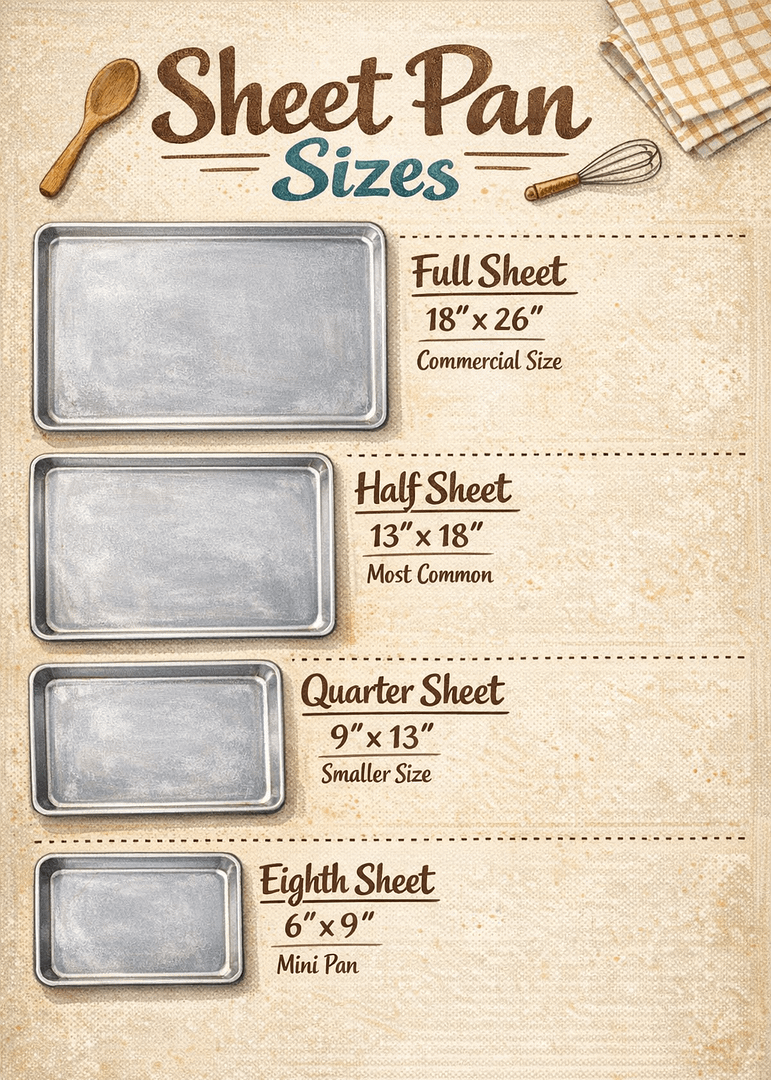
What size sheet pan should I buy?
Start with a half-sheet pan (13 x 18 inches). It fits most standard ovens and handles most recipes.
Why does my sheet pan warp?
It’s usually too thin. Heavy-gauge aluminum prevents that loud oven popping.
Can I roast vegetables directly on the pan?
Yes! Just toss with oil and spread in a single layer.
Are expensive sheet pans worth it?
You don’t need luxury pricing – but you do want quality construction. A sturdy mid-range pan will last years.
Final Thoughts
A good sheet pan won’t get a lot of attention on Instagram.
But it will quietly make your vegetables crispier, your cookies more evenly baked, and your weeknight dinners easier.
If you’re building your kitchen one tool at a time, don’t overlook this simple workhorse.
It’s one of the most practical, hardworking pieces of equipment I own.