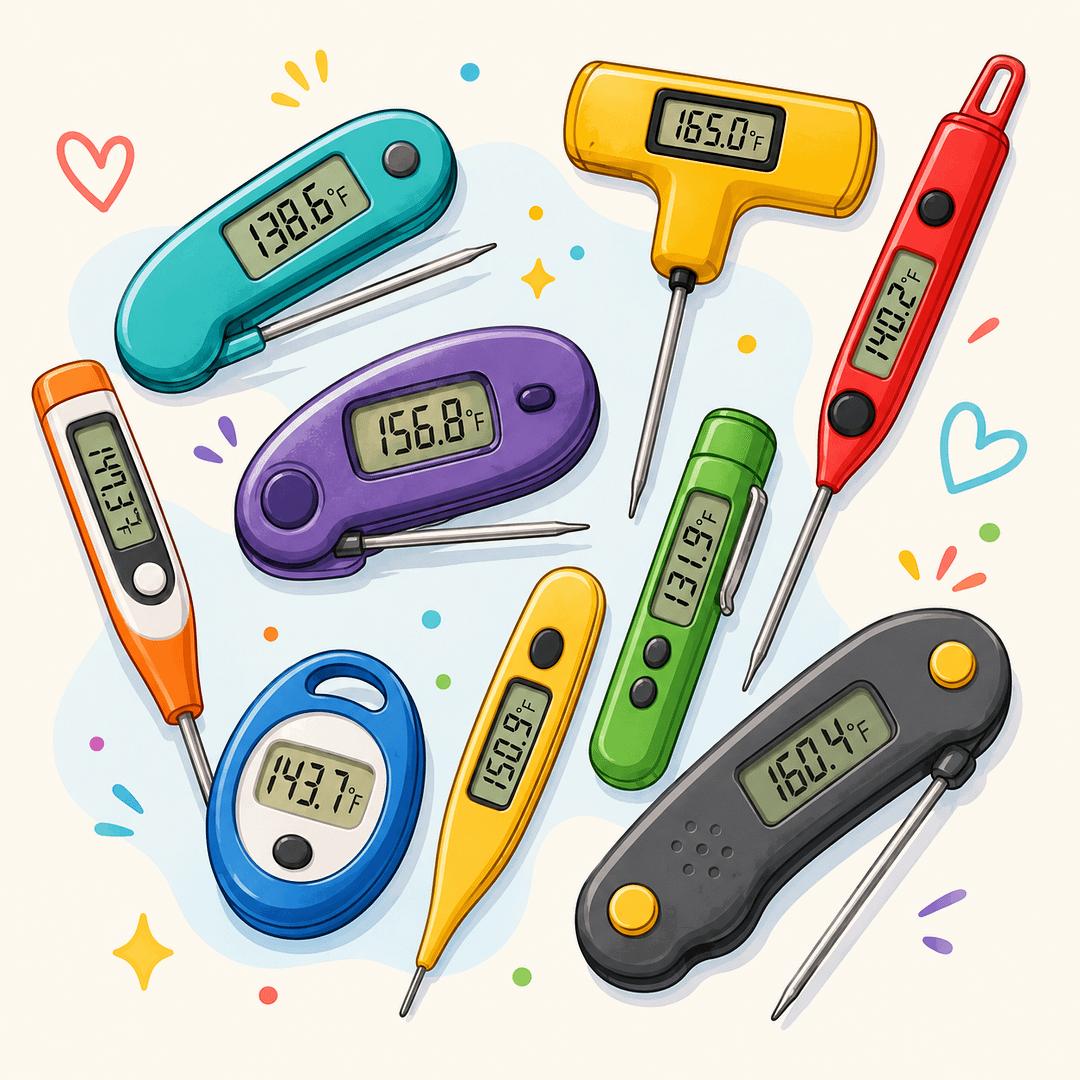
If there is one inexpensive kitchen tool that completely changed the way I cook, it’s an instant-read thermometer.
Seriously.
I used to poke chicken with a fork, cut into pork chops to “see if they were done,” and hope my steaks were cooked the way I wanted them. Sometimes they were perfect. Sometimes…well…let’s just say the dog was happy.
Once I started using an instant-read thermometer, all of that guessing disappeared.
Whether you’re cooking chicken, pork, beef, seafood, casseroles, or even bread, this little gadget can save dinner.
Cooking by Temperature Beats Cooking by Time
Recipes are wonderful guides, but every kitchen is different.
Your oven runs a little hot.
Mine runs a little cool.
Your chicken breasts might be huge while mine are smaller.
Even identical recipes can finish cooking several minutes apart.
That’s why cooking to the correct internal temperature is far more reliable than watching the clock.
An instant-read thermometer tells you exactly what’s happening inside your food, not what should be happening.
No More Dry Chicken
Let’s talk about chicken.
I can’t tell you how many people are terrified of undercooked chicken, so they cook it “just to be safe.”
Unfortunately, “just to be safe” often turns into dry, stringy chicken that’s about as exciting as chewing on cardboard.
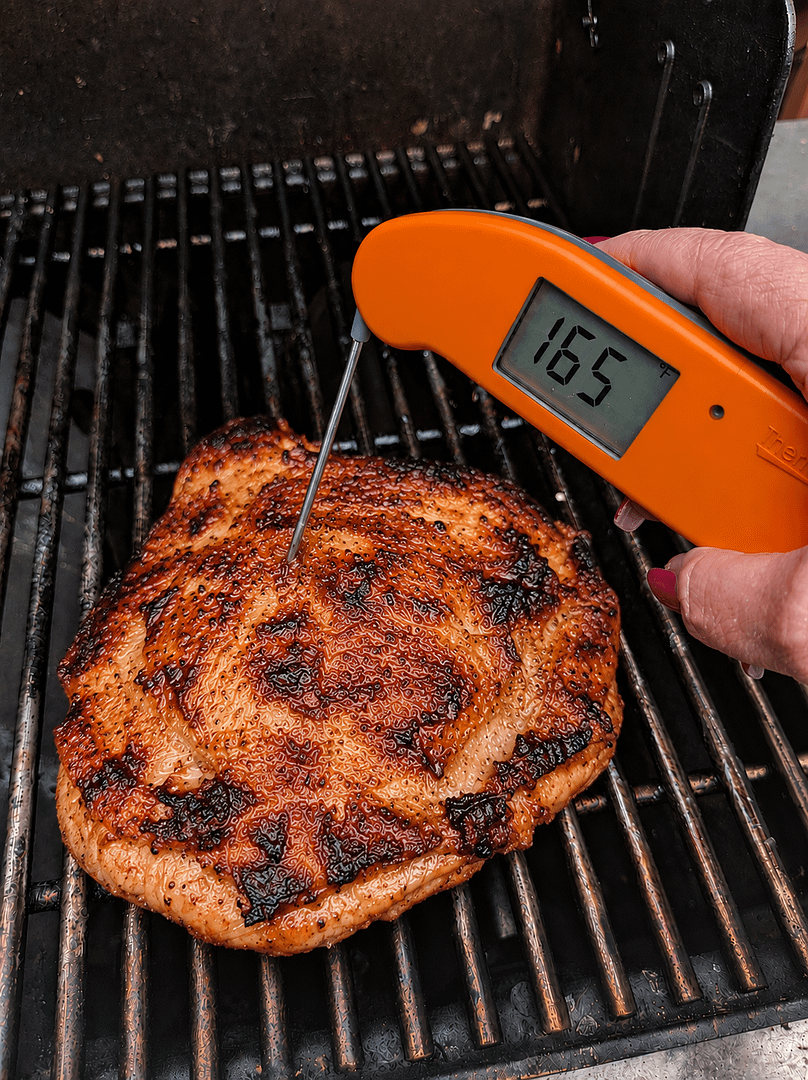
Chicken is safely cooked when the thickest part reaches 165°F.
Once you know it has reached that temperature, you can stop cooking. No guessing. No cutting into it. No dried-out dinner.
Pork Isn’t Supposed to Be Dry
If you’re around my age, you probably grew up eating pork chops that were cooked until there wasn’t a hint of moisture left.
Thankfully, we know better now.
Pork is perfectly safe at 145°F, followed by a three-minute rest.
That one little fact completely changes the eating experience.
Juicy.
Tender.
Actually flavorful.
If you read my post about brining pork, you will know I’m a big believer in giving pork every chance to stay moist. Using an instant-read thermometer is another easy way to make sure that happens.
It Takes the Stress Out of Cooking
One of my favorite things about using an instant-read thermometer is the confidence it gives me.
Instead of wondering:
“Is this done?”
You simply check.
Done.
There’s something really satisfying about knowing instead of hoping.
Whether you’re making Thanksgiving turkey, grilling burgers, roasting a pork loin, or baking salmon, you instantly know where you stand.
It’s Great for More Than Meat
Most people buy one for chicken.
Then they realize they use it all the time.
You can use an instant-read thermometer for:
- Homemade bread
- Yeast dough
- Meatloaf
- Casseroles
- Reheated leftovers
- Candy making
- Caramel
- Deep frying oil
- Checking soup temperatures before serving
It’s one of those kitchen tools that quietly earns its place in the drawer.
It Helps Prevent Overcooking
Food doesn’t magically stay perfect once it’s done.
Every extra minute on the stove or in the oven continues cooking it.
That means:
- chicken gets drier
- steak moves from medium to medium-well
- salmon loses its buttery texture
- pork starts drying out
An instant-read thermometer helps you catch food at exactly the right moment.
My Favorite Tip
Don’t wait until you think dinner is finished.
Start checking the temperature a few minutes before the recipe says it should be done.
That gives you time to pull it at just the right moment instead of realizing it’s already overcooked.
After a while, you’ll start trusting both your instincts and your thermometer, and you’ll become a more confident cook because of it.
A Small Tool That Makes a Big Difference
There are plenty of fancy kitchen gadgets that promise to change your cooking forever.
Most of them end up tucked away in a cabinet collecting dust.
An instant-read thermometer isn’t flashy.
It won’t chop vegetables.
It won’t stir soup.
It won’t make julienne carrots.
But it will help you cook food that’s safer, juicier, and more consistently delicious.
For a relatively small investment, it’s one of the best kitchen tools you can own.
Around here, it’s definitely earned a permanent spot in my kitchen drawer.
The Thermometer I Use
If you’re wondering which instant-read thermometer I keep reaching for, it’s the ThermoWorks Thermapen ONE.
After trying a few different thermometers over the years, this is the one that earned a permanent spot in my kitchen. It’s incredibly fast (usually giving a reading in about one second), easy to read, and consistently accurate. Whether I’m checking chicken on the grill, pork chops in the oven, or a roast that’s almost finished, I know I can trust the temperature I’m seeing.
There are plenty of good instant-read thermometers on the market, but if you’re looking for one that should last for years, the Thermapen ONE is the one I’d recommend without hesitation.
Safe Internal Cooking Temperatures
Keeping these temperatures in mind will help you cook confidently every time:
| Food | Safe Internal Temperature |
|---|---|
| Chicken & Turkey | 165°F |
| Ground Chicken & Turkey | 165°F |
| Pork Chops & Pork Loin | 145°F + 3-minute rest |
| Ground Pork | 160°F |
| Ground Beef | 160°F |
| Steaks & Roasts (Medium-Rare) | 130–135°F |
| Steaks & Roasts (Medium) | 140–145°F |
| Fish | 145°F |
| Leftovers & Casseroles | 165°F |
Always insert the thermometer into the thickest part of the food, avoiding bones, which can give inaccurate readings.
A little instant-read thermometer takes all the guesswork out of cooking. It’s one of those humble kitchen tools that quietly makes every meal a little better, and if you don’t already have one, I think you’ll wonder how you ever cooked without it.

