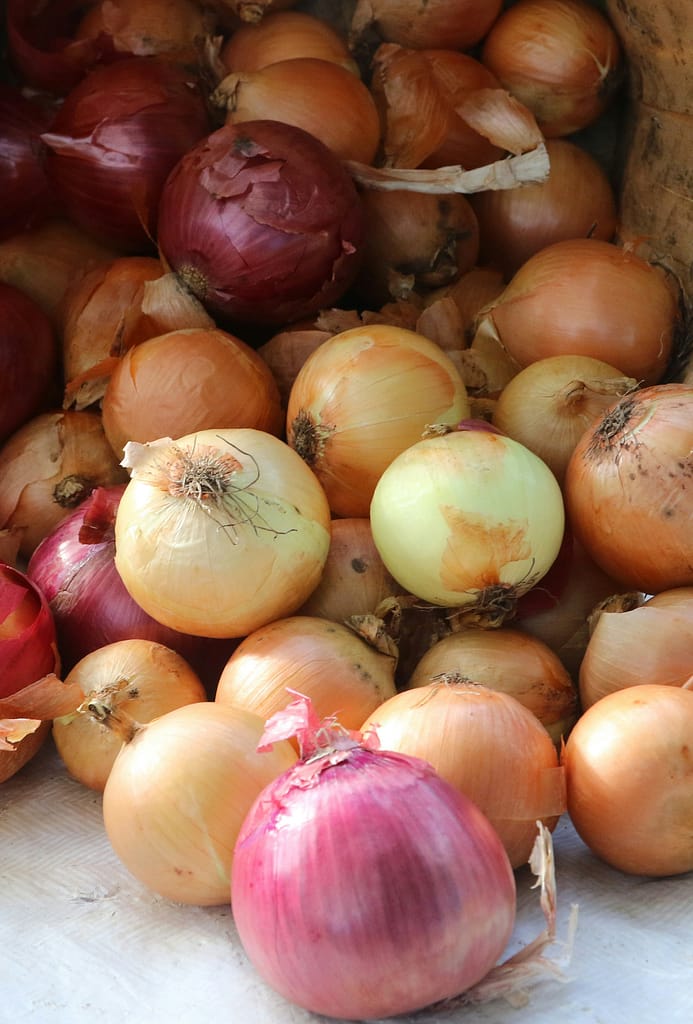
Have you ever chopped an onion without a single tear, only to have the next one leave you reaching for a tissue box?
You’re not imagining things.
I’ve been wondering about this whole onion/crying thing for years and I decided to finally look things up and do a bit of reading! So let me share what I’ve learned…
Some onions are much more likely to make your eyes burn and water than others. The type of onion, how it was grown, how old it is, and even how you cut it can all affect how much irritation you experience.
Let’s take a look at why onions make us cry and why some seem much worse than others.
Why Onions Make You Cry
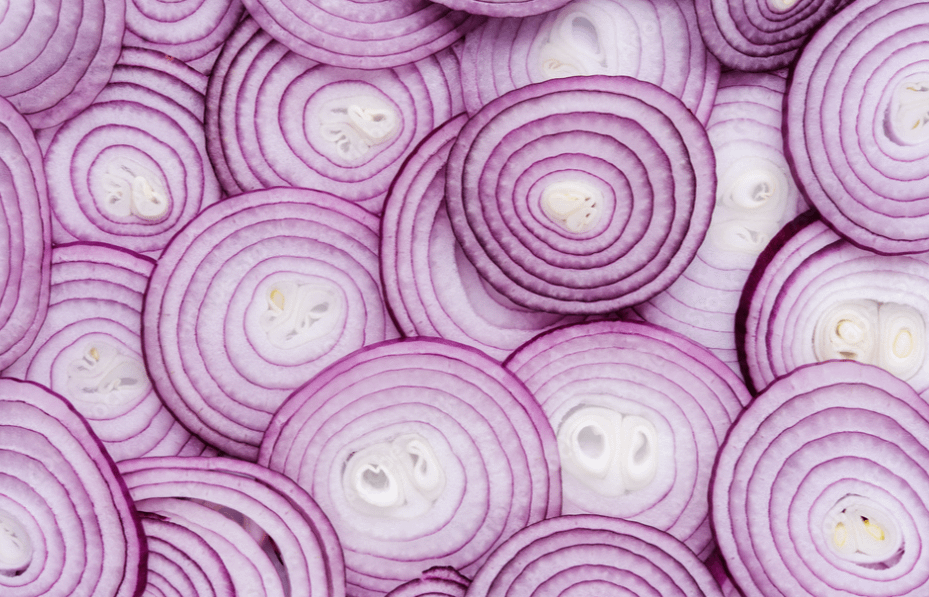
Onions naturally contain sulfur compounds that help protect the plant while it grows underground.
When you cut into an onion, you break open its cells and release enzymes that react with those sulfur compounds. This reaction creates a gas called syn-propanethial-S-oxide.
Bet you didn’t know that! I certainly didn’t!
As the gas rises from the cutting board and reaches your eyes, it mixes with the moisture on the surface of your eyes and creates mild irritation.
Your eyes respond by producing tears to wash the irritant away.
In short, onions don’t actually make you cry. Your eyes are simply protecting themselves.
Does the Type of Onion Matter?
Yes! Different varieties of onions contain different amounts of sulfur compounds, which means some onions are naturally more tear-inducing than others.
Yellow Onions
Yellow onions are the most common cooking onion and are often the biggest culprit when it comes to tears.
They contain higher levels of sulfur compounds and have a stronger flavor than many other varieties. Because they’re used in soups, stews, casseroles, and everyday cooking, they’re often the onions responsible for those watery eyes.
White Onions
White onions tend to have a sharper, more pungent flavor.
Many people find they can be just as irritating – or even more irritating – than yellow onions. Their bold flavor makes them popular in Mexican dishes, salsas, and fresh preparations.
Red Onions
Red onions are generally a little milder.
While they can still make your eyes water, many home cooks find them less aggressive than yellow or white onions. Their slightly sweeter flavor makes them popular for salads, sandwiches, and burgers.
Sweet Onions
Sweet onions, including Vidalia, Walla Walla, and Maui onions, are often the gentlest on your eyes.
Because they contain less sulfur and more natural sugars, they typically release less of the irritating gas that causes tears. If you’ve ever chopped a sweet onion and wondered why it barely bothered you, that’s likely the reason.
Why One Onion Can Be Worse Than Another
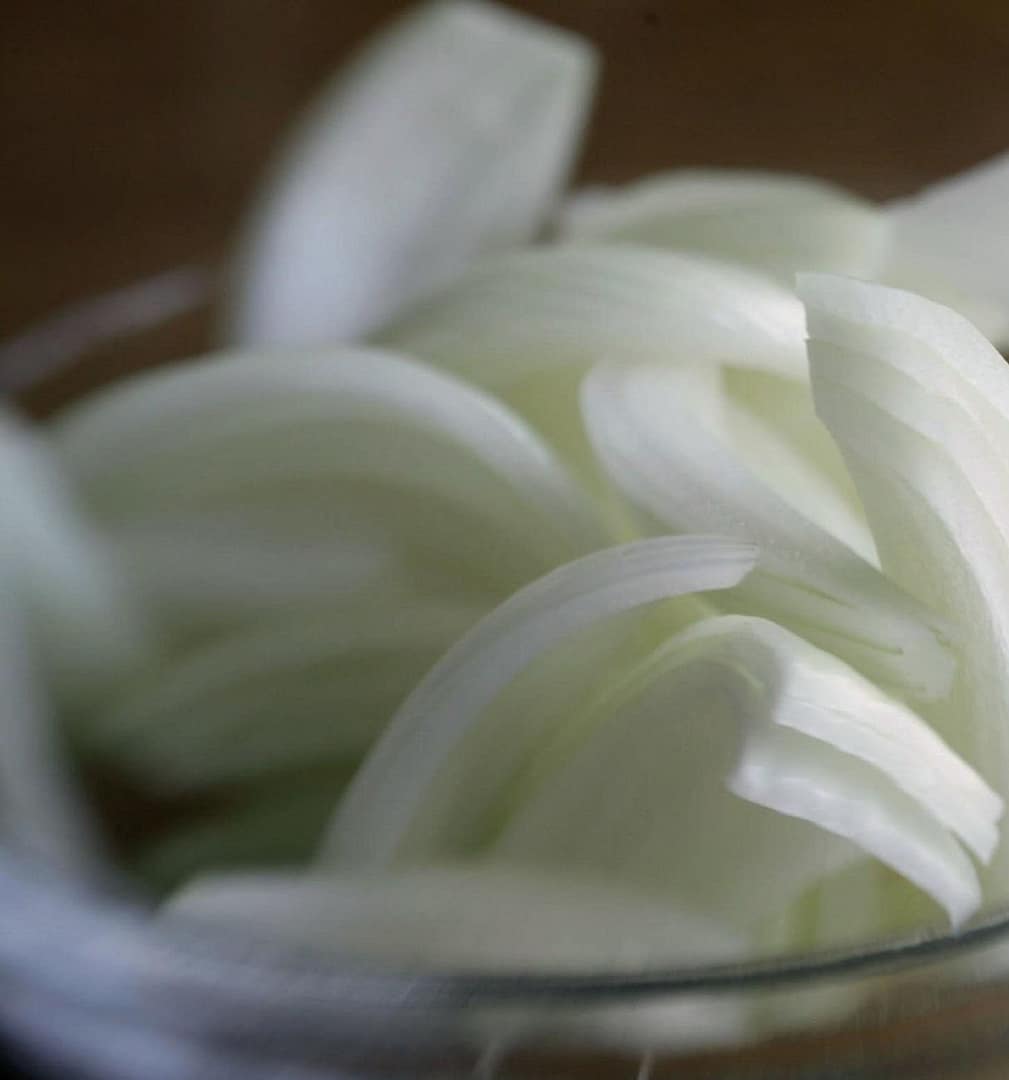
Even onions of the same variety can behave differently.
Several factors affect how pungent an onion becomes:
Growing Conditions
Weather plays a surprisingly important role.
Onions grown in drier conditions often develop higher concentrations of sulfur compounds, making them stronger and more likely to cause tears.
Age and Storage
The age of an onion can also affect its chemistry.
Some onions become more pungent during storage, while others mellow over time. That’s why the onion sitting in your pantry may behave differently than a freshly purchased one.
How You Cut It
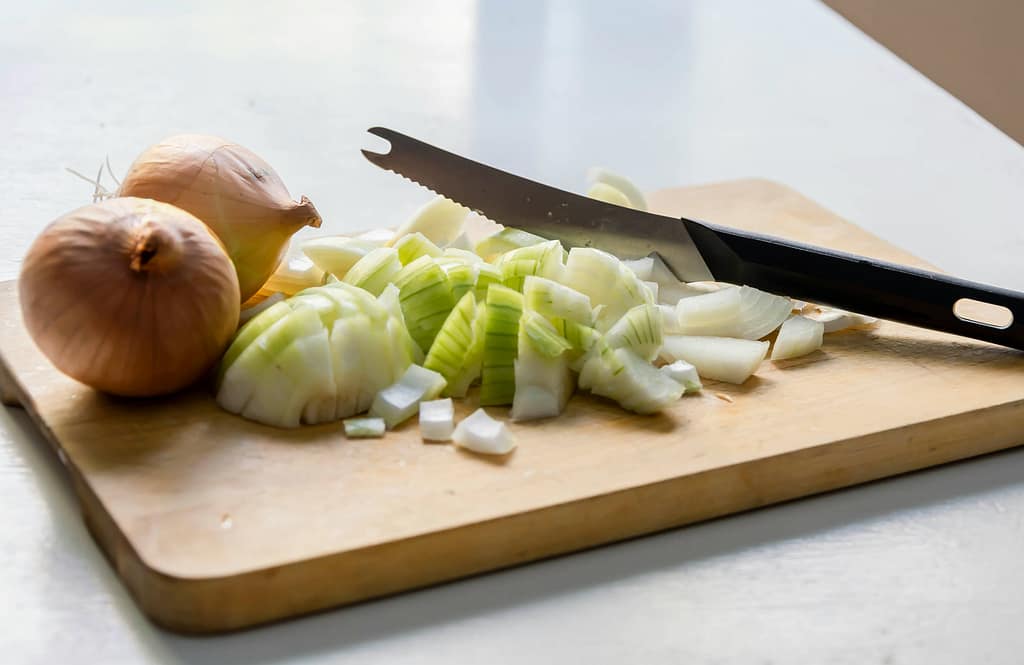
A dull knife crushes onion cells and releases more of the irritating compounds into the air.
A sharp knife slices cleanly through the onion, reducing the amount of gas released.
How to Reduce Onion Tears
While you may not be able to eliminate tears completely, a few simple tricks can help:
Chill the Onion
Place the onion in the refrigerator for about 30 minutes before cutting. The cooler temperature slows the chemical reaction that produces the irritating gas.
Use a Sharp Knife
A sharp knife damages fewer cells and releases fewer irritants.
Turn on a Fan
A small fan can help blow the gas away from your face before it reaches your eyes.
Cut Near Ventilation
An open window or range hood can help remove the gas from the kitchen.
Leave the Root End for Last
The root end contains the highest concentration of sulfur compounds. Cutting it last may reduce some of the irritation.
The Bottom Line
Not all onions are created equal.
Yellow and white onions tend to cause the most tears, while red onions are often milder and sweet onions are usually the gentlest. Add in differences in growing conditions, storage, and cutting technique, and it’s easy to see why one onion barely affects you while another leaves you blinking through tears.
So the next time you’re chopping onions for dinner and wondering why your eyes are watering, remember – it might not be you.
It might just be the onion.